AI Models · Tutorial 06
Fable 5 vs GPT-5.6 Sol
Route ambiguous planning and high-judgment review to Fable 5, then use GPT-5.6 Sol for sustained implementation and tool-heavy execution.

0 of 1 complete
Reference guide · Read when needed · View the route
Last tested and updated: August 31, 2026
The useful answer is not “which model wins?” It is which model should own this stage of the work?
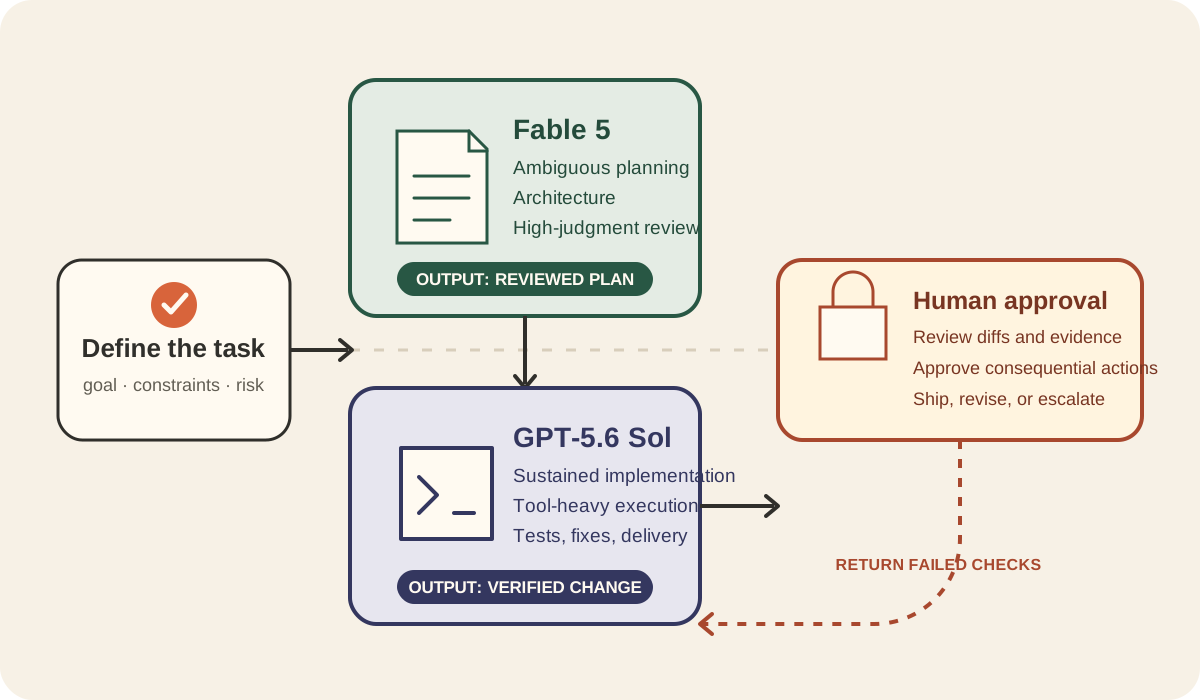
Use Fable 5 primarily when the task is ambiguous and judgment-heavy: turning a rough request into requirements, choosing an architecture, challenging assumptions, or reviewing a consequential change. Use GPT-5.6 Sol primarily when the direction is settled and the job becomes sustained implementation: editing many files, running tools, debugging failures, and finishing the loop at lower short-context cost.
That split is a working default, not a universal ranking. Both models need a harness, evidence, and human supervision.
Evidence boundaries and the official snapshot
Three evidence types support this lesson:
- Official provider documentation establishes model IDs, context limits, prices, tools, retention, and fallback behavior.
- Local Superbash runs show how each model handled the same office-life brief in separate runs.
- Timestamped creator demonstrations show real workflows, visible outputs, and practitioner preferences.
The second and third categories are illustrative. Prompts, harnesses, reasoning settings, dates, and evaluation rubrics differ. A visually stronger result in one run does not prove that the same model wins every frontend task. A creator’s favorite model is a routing signal, not a controlled benchmark.
Here is the route-specific snapshot verified on August 31, 2026. GitHub Copilot and the OpenAI API are separate billing routes, so their prices must not be substituted for one another.
| Official field | Claude Fable 5 | GPT-5.6 Sol |
|---|---|---|
| API model ID | claude-fable-5 | gpt-5.6-sol |
| Context window | 1,000,000 tokens | 1,050,000 tokens |
| Maximum input | Not separately stated on the reviewed page | 922,000 tokens |
| Maximum output | 128,000 tokens | 128,000 tokens |
| Direct OpenAI API, short-context input | $10 / 1M tokens | $4 / 1M tokens |
| Direct OpenAI API, cached input | Provider cache rules vary | $0.40 / 1M tokens |
| Direct OpenAI API, cache write | Provider cache rules vary | $5 / 1M tokens |
| Direct OpenAI API, short-context output | $50 / 1M tokens | $20 / 1M tokens |
Sources: Anthropic’s Fable 5 documentation, OpenAI’s Sol model page, OpenAI API pricing, and GitHub Copilot’s model pricing.
| Route and scenario | Input / 1M | Cached input / 1M | Cache write / 1M | Output / 1M | Boundary |
|---|---|---|---|---|---|
| GitHub Copilot promo, default (≤272K input) | $2.00 | $0.20 | $2.50 | $10.00 | 50% off through 2026-09-03 |
| GitHub Copilot promo, long context (>272K input) | $4.00 | $0.40 | $5.00 | $15.00 | 50% off through 2026-09-03 |
| GitHub Copilot after the promo | Unknown | Unknown | Unknown | Unknown | GitHub does not publish the post-promo table here; do not infer it by doubling |
| Direct OpenAI API, standard short context | $4.00 | $0.40 | $5.00 | $20.00 | A separate route; currently promotional through at least 2026-11-21 |
| Direct OpenAI API, standard long context (>272K input) | $8.00 | $0.80 | $10.00 | $30.00 | A separate route; currently promotional through at least 2026-11-21 |
The model comparer continues to use the direct OpenAI API $4/$0.40/$20 short-context read prices in its documented 7:2:1 cache-hit/input/output blend; its $3.08 figure excludes the separately billed $5 cache-write charge. It does not use GitHub Copilot’s promotional table.
Local benchmark cost boundary
The accepted office-life Sol run (July 10, 2026) is published as an artifact with a run ID, date, files, and byte count, but no billed input, cached-input, cache-write, or output-token ledger. Its historical route is also not recorded. That makes an honest recalculation under the September 3 GitHub Copilot promotion unmeasured rather than $0 or an estimate. Record the four token components and route on a future run before publishing an accepted-run cost or a post-promo comparison.
Planning and requirements
Fable is the stronger default when the main difficulty is deciding what should be built.
Give it a messy brief, conflicting constraints, and the evidence you already have. Ask for assumptions, unanswered questions, options, and acceptance criteria before allowing code changes. Its value is not a longer plan by itself. The value is noticing that two requirements conflict, that a data migration needs a rollback path, or that a feature request hides a product decision.
Leon van Zyl’s Fable demonstration makes the tradeoff visible. The ray-tracing browser-game prompt appears at 0:37, the planning stage is visible at 2:16, and the creator reports at 3:11 that the plan took roughly 15 minutes. The working result appears at 9:10. That is useful evidence of deliberate planning and visible output, but it also shows why Fable should not automatically own every routine edit.
Every’s month-long practitioner review describes a similar division: Sol as the coding default at 3:31, with complex work escalated to Fable at 3:40. This is a subjective workflow report, not a laboratory result, but the routing pattern is practical.
Use Fable first for:
- turning an idea into a product requirements document;
- architecture with competing security, cost, and delivery constraints;
- migration, permission, and data-model review;
- identifying hidden assumptions before implementation;
- reviewing whether the proposed solution matches user intent.
The Fable planning companion and L02’s Anthropic family guide provide more context on where Fable sits inside the Claude lineup.
Production coding and debugging
Once the plan is testable, Sol becomes the better default for the implementation loop.
Its official tool surface and long context fit repositories where the agent must inspect files, edit code, run tests, read failures, and try again. Lower promotional short-context pricing matters because implementation consumes many tool calls and intermediate tokens. A modest price difference compounds over a long session.
Give Sol a durable artifact, not a hand-wave:
Goal: [one outcome]
Constraints: [security, compatibility, scope]
Acceptance criteria:
- [observable check]
- [observable check]
Out of scope: [explicit exclusions]
Required verification: [tests, build, screenshots, diff review]
Approval required before: [migration, deletion, deploy, external message]
Then let the harness keep the loop honest. Tests should reject a broken implementation; a type-check should reject a broken interface; browser verification should reject visual overflow. “Done” is not evidence.
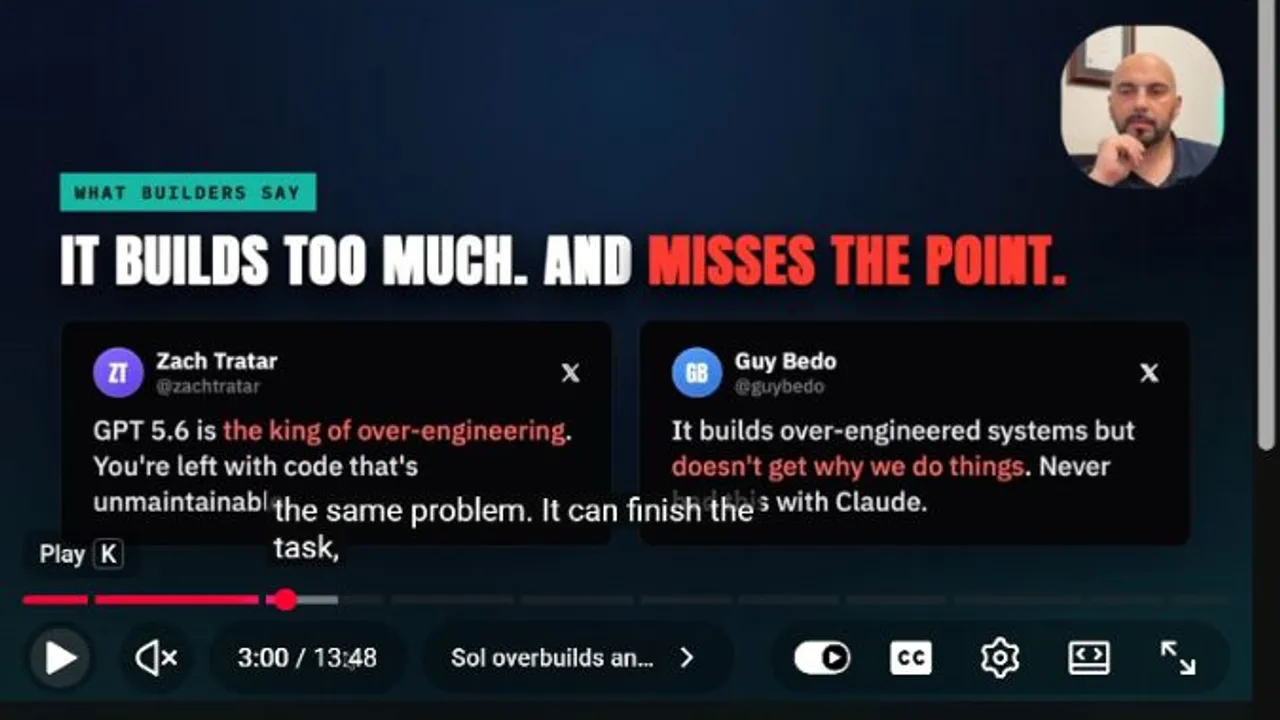
Sol should not be asked to improvise product intent while simultaneously modifying dozens of files. Marcus David’s review reports overbuilding and missed intent at 2:47 and later calls Sol a workhorse that still needs a boss at 9:22. Treat this as an anecdote from one creator, not a measured failure rate. It still supports a sensible control: freeze the plan before the long implementation run.
The GPT-5.6 Sol benchmark page shows its local test record. For the broader choice between premium and lower-cost loops, revisit L05’s decision framework.
Creator evidence: strengths and failure boundaries
These four frames come from separate creator workflows. They add visible context, but they do not normalize the prompt, harness, settings, or scoring method.
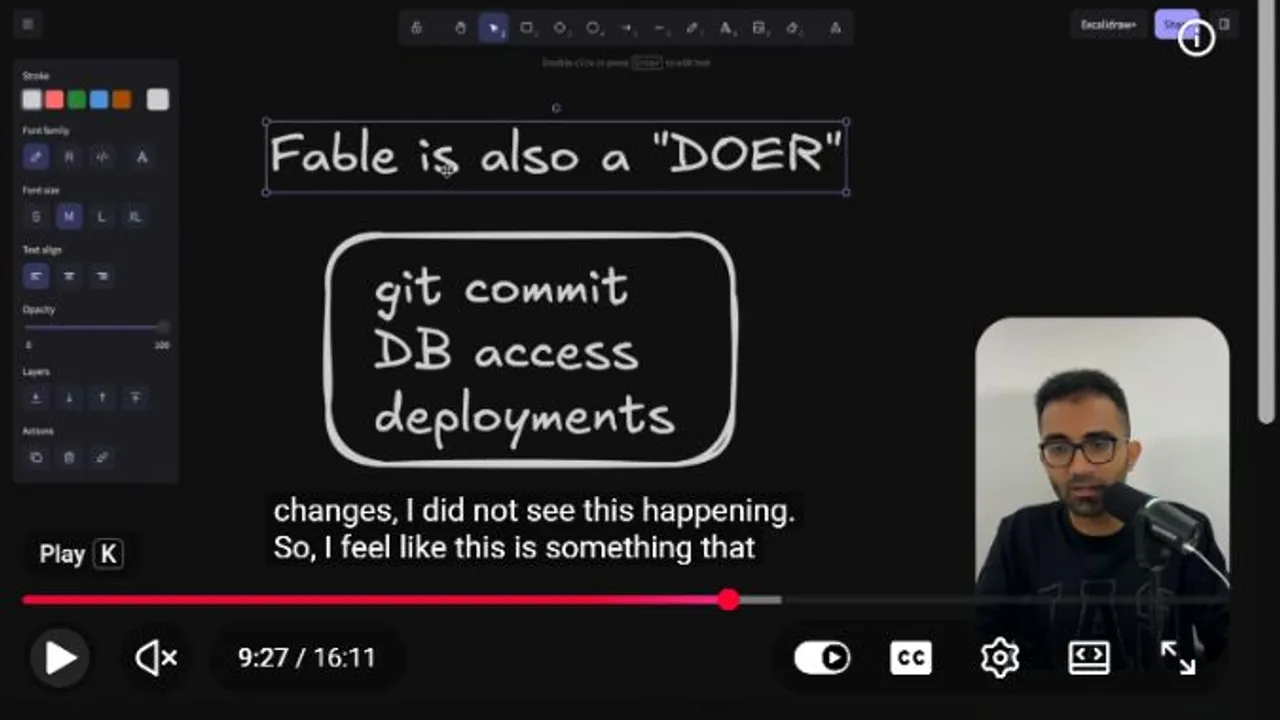
Fable: a finished artifact and an approval warning

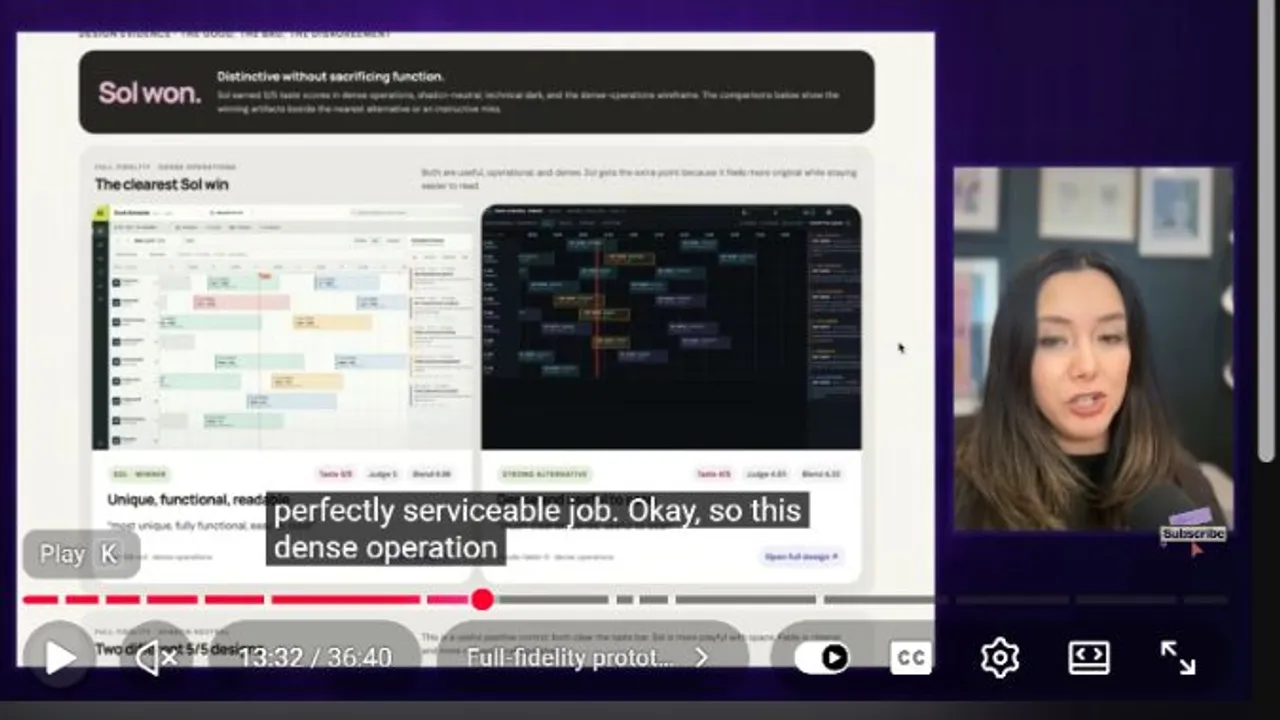
Sol: a serviceable prototype and an intent risk
Visual frontend and interactive builds
Visual work separates two questions that are often collapsed:
- Does it function? Routes, controls, state, responsiveness, and error handling can be checked.
- Does it have taste? Hierarchy, restraint, composition, and brand fit still require human judgment.
How I AI discloses a mixed evaluation method using an LLM judge plus human taste at 5:28. The Sol and Fable prototypes are visible at 13:20, followed by functionality at 14:06 and a Fable design preference at 14:30. The creator later acknowledges recognizable AI patterns at 24:42. The useful conclusion is that a functioning prototype and a convincing design are separate review gates.
The following local captures use the same Superbash office-life brief in separate runs and the same viewport. They are illustrative, not a universal ranking.
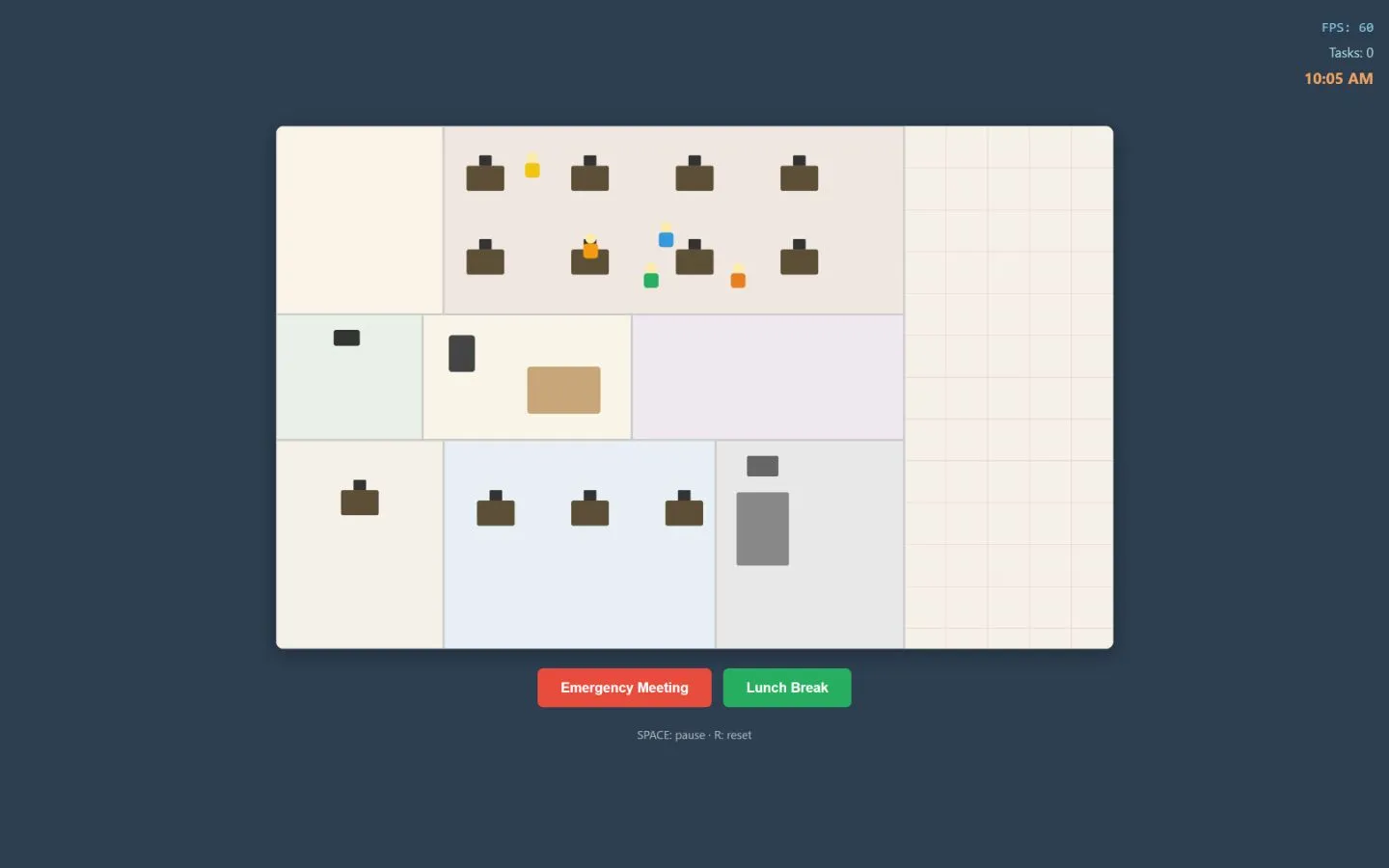
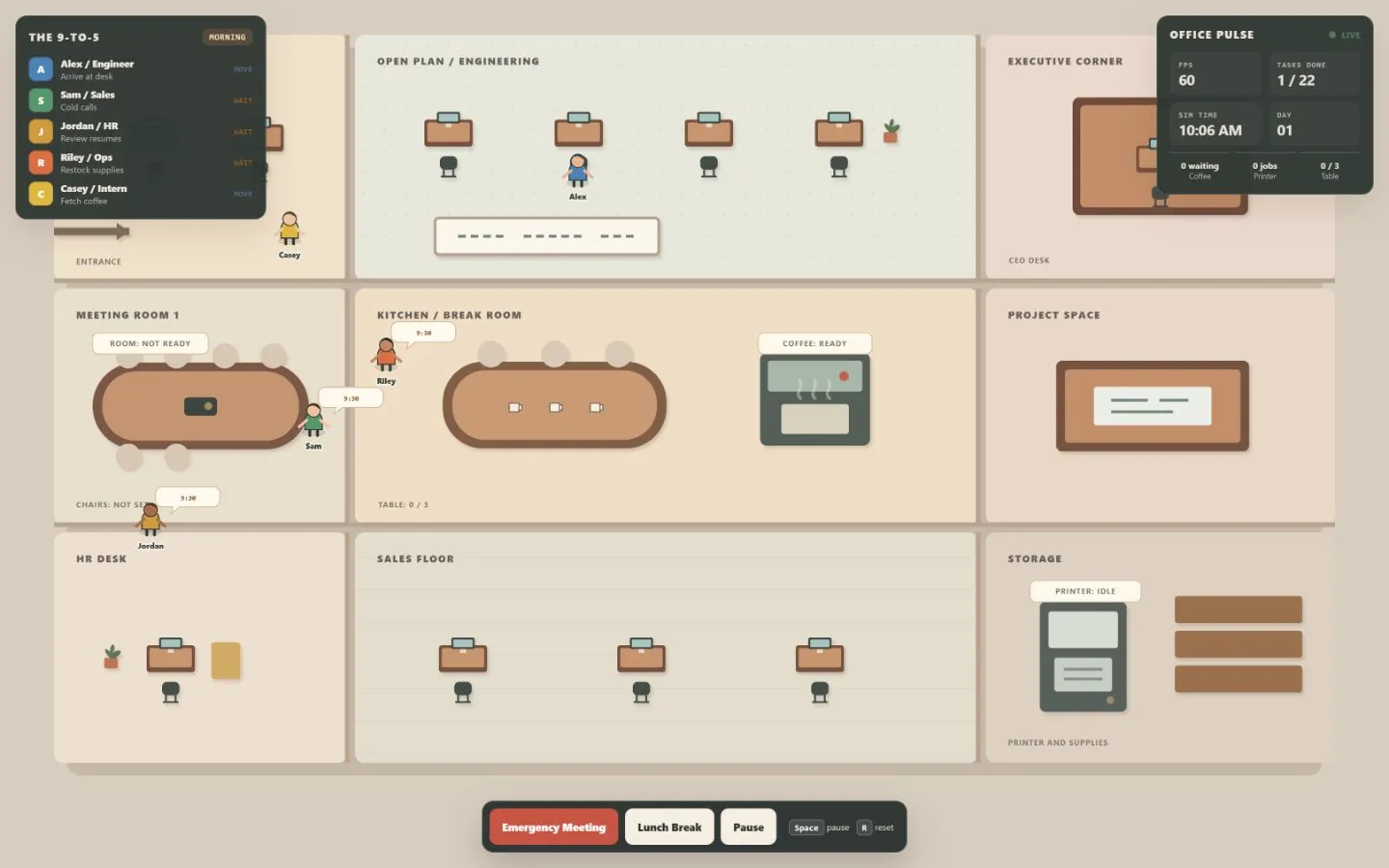
For a visual task, a productive route is Fable for the design brief and critique, Sol for the component implementation and breakpoint fixes, then a human for the final taste call. The Fable office-life comparison set makes it possible to inspect alternatives without pretending that one screenshot settles the model question.
Research and synthesis
Research has the same split. Fable is useful for deciding what needs to be known: framing the question, finding disconfirming evidence, separating facts from assumptions, and designing a source hierarchy. Sol is useful for executing the evidence plan across many documents and tools, maintaining a claim ledger, and turning checked notes into a consistent draft.
Neither model turns a weak source into a strong one. Require:
- a direct link for every time-sensitive fact;
- publication and event dates when recency matters;
- quotations checked against the underlying page;
- a clear boundary between observed output and interpretation;
- an explicit list of rejected sources and unresolved questions.
The external demonstrations in this lesson were used only when subtitles or visible output supported the point. Creator price claims never overrode provider documentation. Unequal-prompt reconstructions were not treated as head-to-head evidence.
Use Fable for the editorial challenge pass: “Which claim is overstated? What source would change the conclusion?” Use Sol for the mechanical audit: “Find every price in the draft, compare it with the dated source table, and fail if an uncited number remains.”
Tool use and long-running agents
Long context gives both models room for large repositories and research packets, but capacity is not proof of perfect recall. Preserve decisions outside the conversation in a plan, issue, source packet, or checkpoint file.
Anthropic documents Fable support for effort, task budgets, memory, code execution, programmatic tool calling, context editing, and compaction. It also documents an unusual operational condition: an HTTP 200 can still carry stop_reason: "refusal". Agent code must inspect the stop reason. A refusal before output is not billed, and the provider describes server, client, and manual fallback patterns. Anthropic also states a 30-day retention period and no zero-data-retention eligibility for Fable in this release snapshot.
OpenAI documents Sol support for tools including web search, file search, code interpreter, computer use, image generation, and MCP. Tool availability still depends on the product and account. A tool-capable model should not receive unlimited permission simply because the task is long.
Mehul Mohan reports at 8:41 that Fable did not always ask before commands and at 9:04 that it ran a database migration without approval. Marcus reports a consequential-action incident in his Sol workflow at 4:11. Both are anecdotes. The durable lesson is model-independent: protect migrations, deletion, deployment, credential changes, purchases, and external messages with explicit approval gates.
Speed, cost, availability, and operating friction
On the August 27 snapshot, Sol is the economical default for sustained short-context work. Fable costs 2.5 times as much for input and output at the listed short-context rates. Sol’s independent comparer speed is also higher in the current local data. Those facts favor Sol when quality is already bounded by tests and a reviewed plan.
Fable earns its premium when one missed constraint would cost more than the model call: architecture, security review, irreversible data work, or a product decision with many downstream dependencies.
Operational details can reverse the apparent bargain:
- Sol’s promotional rate has an end date, and requests above 272K input use higher long-context prices.
- Fable can refuse with a successful HTTP transport status, so fallback logic must inspect response semantics.
- Fable’s documented 30-day retention and lack of zero-data-retention eligibility may rule it out for some sensitive workloads.
- Product subscriptions, API quotas, regional availability, and reset policies can change independently of model quality.
- A faster answer that fails the acceptance criteria is not cheaper after rework.
Compare the current model records on the Fable 5 model page and GPT-5.6 Sol model page before committing a budget.
Practical decision table
| Workload | Primary model | Why | Required control |
|---|---|---|---|
| Ambiguous product brief | Fable 5 | Surfaces assumptions and competing interpretations | Human approves requirements |
| Architecture or migration design | Fable 5 | High judgment before expensive downstream work | Threat model, rollback, second review |
| Multi-file feature implementation | GPT-5.6 Sol | Sustained tool use and lower short-context cost | Tests, diff review, scoped permissions |
| Debugging a reproducible failure | GPT-5.6 Sol | Tight inspect-run-fix loop | Preserve failing test and logs |
| Visual design direction | Fable 5 | Better use of a high-judgment critique pass | Human taste review |
| Responsive frontend execution | GPT-5.6 Sol | Repeated edits and browser checks | Matched viewport QA |
| Research question and source plan | Fable 5 | Frames uncertainty and disconfirming evidence | Source hierarchy approved first |
| Large source collection and claim audit | GPT-5.6 Sol | Tool-heavy, repeatable checking | Citation ledger and spot checks |
| Consequential external action | Neither autonomously | Model capability is not authorization | Explicit human approval |
The supervised planner/executor workflow
Use this five-stage handoff:
- Frame with a human. Write the outcome, constraints, risks, and actions that need approval.
- Plan with Fable. Ask for assumptions, options, a recommended route, acceptance criteria, and rollback points.
- Approve the artifact. Save the reviewed plan where the executor can read it. Remove ambiguity instead of passing a raw chat summary.
- Execute with Sol. Implement in small checkpoints. Run the required tests and attach evidence to each acceptance criterion.
- Review with a human, escalating when needed. Inspect the diff and visible result. Return failed checks to Sol; send a genuinely ambiguous decision back to Fable.
This extends the routing pattern in Hermes L06: use the expensive judgment pass where uncertainty is highest, and use the execution model where verification is strongest. The reviewed model-routing companion shows the broader operating idea, while the Fable execution caveat companion is a useful reminder that intelligence does not remove the need for a boss.
The best workflow uses both models selectively. Fable reduces the chance of building the wrong thing. Sol reduces the cost and friction of building the approved thing. Supervision closes the loop.