Product case study · November 11, 2026
Turn a Claude Code Export into a Useful Handoff
Export a Claude Code conversation, pair it with a failing check, and write a short handoff that tells the next developer exactly where to start.
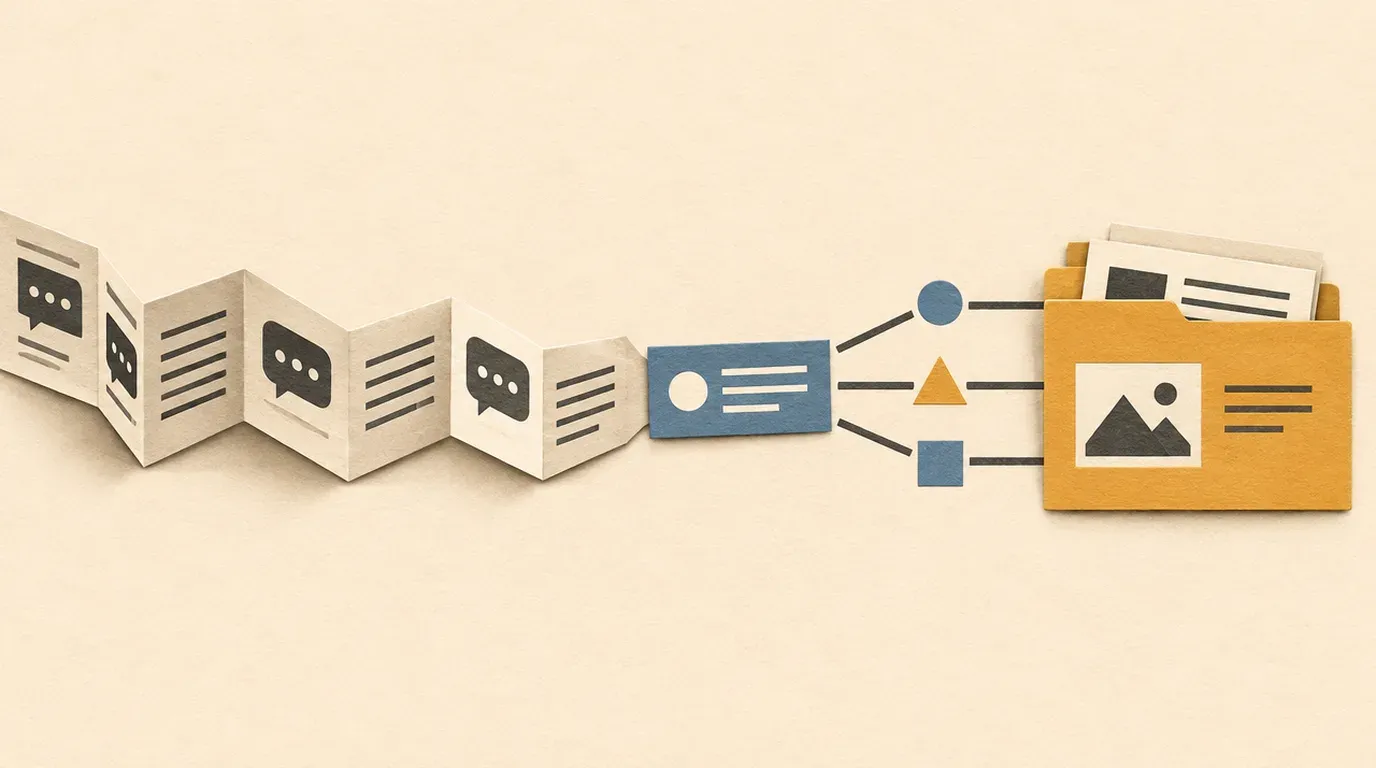
Keep the transcript as a reference; make the handoff short enough that someone will actually read it.
Nobody taking over your bug wants to read forty turns of an agent changing its mind. They want the file, the failure and the next useful move. Claude Code’s export is handy because you can keep that long conversation available while handing over something much smaller.
My preferred handoff fits on one screen. The transcript is there for the moment someone asks, “Why did you rule that out?” It should not be their entrance exam.
This exercise gives you a deliberately broken discount function, a saved failing check and a brief for whoever fixes it next. Sources checked November 11, 2026. The local fixture and shell capture were tested; the authenticated Claude conversation and export steps were not. Those steps are a documentation-backed exercise, not a reported live result.
Give the conversation a concrete problem
You need Bash, Python 3 and an installed, authenticated Claude Code for the conversation step. Start in a fresh practice folder, using this fictional code only:
lab_root=$(mktemp -d /tmp/claude-handoff.XXXXXX)
mkdir "$lab_root/project" "$lab_root/evidence"
cd "$lab_root/project"
cat > discount.py <<'PY'
def discounted_total(price, percent):
    return price
PY
cat > check_discount.py <<'PY'
from discount import discounted_total

actual = discounted_total(100, 10)
print(f"10 percent off 100: expected 90, got {actual}", flush=True)
assert actual == 90, f"discount missing: {actual} != 90"
PY
cp discount.py ../evidence/discount-before.py
if python3 check_discount.py > ../evidence/check-before.txt 2>&1; then
  check_status=0
else
  check_status=$?
fi
printf '%s\n' "$check_status" > ../evidence/check-before.exit
printf 'Keep this lab path: %s\n' "$lab_root"
cat ../evidence/check-before.txt
The check should report expected 90, got 100 and fail with an assertion. That is the intended starting point. The function ignores percent; the next developer has a small, reproducible bug instead of a vague complaint about pricing.
The saved exit status matters because creating a log file tells you nothing about whether its command passed. Here, a nonzero status belongs in the handoff as an observed failure. Keep the same terminal open so the printed lab path and current directory remain easy to find.
Ask Claude for diagnosis, then a brief
Record the installed version and start the session from project:
claude --version > ../evidence/claude-version.txt
claude
The CLI reference documents the interactive launcher and version option. If Claude is not installed or authenticated, finish the first-session lesson before continuing.
At the Claude prompt, name the session:
/rename discount-handoff-labThen send:
Read discount.py and check_discount.py in this practice project.
Explain why the check would fail. Do not edit files or run commands.
The required behavior is: 10 percent off 100 returns 90.
Suggest the smallest next change, but leave implementation for later.
This is a task instruction, not a filesystem restriction. Keep your normal permission controls and review any unexpected tool request. For this exercise, reading the two files is enough.
Once you have a diagnosis, ask for the handoff:
Draft a handoff of at most 180 words in your reply. Do not write files.
Use these five labels: Goal, Current state, Evidence, Next action, Open questions.
I ran python3 check_discount.py before this session. It failed with
"10 percent off 100: expected 90, got 100" and an AssertionError.
The saved log is ../evidence/check-before.txt and its exit status is in
../evidence/check-before.exit. Attribute that run to me; do not claim you ran it.
Name the source file and the exact check command. Keep your proposed fix
separate from completed work. Mention that rounding and invalid inputs
are outside this exercise's defined behavior.
The word limit is an editorial choice. A handoff should preserve decisions, not every sentence that led to them. “Change the formula in discount.py, then rerun python3 check_discount.py” gives the next person somewhere to start. “Investigate the pricing system” sends them back to square one.
Export the reference, save the short version
Still inside Claude, run:
/export ../evidence/conversation.txtAnthropic documents /export as a readable plain-text rendering of the conversation, including messages and tool output; a filename writes directly instead of opening the export menu. It is useful for inspection, not a stable structured-data interface. See session export documentation.
Exit the session and open the exported file in your editor. Confirm it contains this exercise’s diagnosis and final brief. Copy the brief into ../evidence/handoff.md, correcting anything that misstates the work. Keep the export intact as the reference copy.
For this fixture, a good brief should make all five points clear:
| Label | What belongs here |
|---|---|
| Goal | Return 90 for a price of 100 with a 10 percent discount. |
| Current state | discount.py returns the original price; no fix has been applied. |
| Evidence | The user-run check failed; give the log path and check command. |
| Next action | Implement percentage subtraction and rerun the check. |
| Open questions | Rounding and invalid-input rules have not been specified. |
Before sharing a real export, read it for private code, credentials and unrelated conversation. Send the reviewed brief and only the supporting material the recipient needs. A full transcript is often a poor attachment even when it is an excellent local reference.
Check what actually crossed the handoff
From the practice project’s shell, check that the diagnosis step left the source untouched:
cmp discount.py ../evidence/discount-before.pyNo output and exit status zero mean those two files match. If they differ, inspect the changes and correct the brief; do not keep claiming “no fix applied.” This checks one file, not the whole workspace.
In an actual Git project, review git diff for unstaged tracked changes and git diff --cached for staged changes. Neither shows the contents of untracked files, so inspect git status --short as well. The Git diff reference explains the two comparisons. A transcript of intended edits cannot replace looking at the code that exists now.
Finally, read only handoff.md. Can you identify the failure, locate its evidence and name the next command without searching the transcript? If yes, the brief has done its job. If the brief says the fix passed, it has failed this exercise: nobody has implemented or verified a fix yet.
When you want to continue instead of hand over
An exported text file is not a portable replacement for Claude’s saved session. To continue the local conversation, return to this practice directory and use:
claude --resume discount-handoff-labThe session guide documents named-session resume. If the name is ambiguous, use the session picker and inspect the preview. If export failed, check the destination directory and permissions, then export to a new filename; do not infer success from a chat acknowledgment.
Keep the files while you need the exercise. Nothing here changes global settings or requires a cleanup command. When someone takes over, give them the brief first. Let the longer conversation answer follow-up questions.
Official sources
Checked November 11, 2026:
- Claude Code: manage sessions: naming, plain-text export and resuming saved conversations.
- Claude Code CLI reference: interactive startup, version reporting and resume options.
- Git diff reference: comparisons for unstaged and staged tracked changes.
Put this to work
Turn a long coding conversation into a concise, checkable handoff.
Try
Diagnose a fictional discount bug, export the session, and prepare a five-part brief.
Prove it worked
Compare the brief with a locally captured failing check and the unchanged source file.
Keep in view
- Export a readable conversation without confusing it with a resumable session.
- Give the next developer the exact failure, file and next action.
- Keep observed results separate from an agent's proposed fix.