
Shinjuku, just after rain
The city switches on, one window at a time.
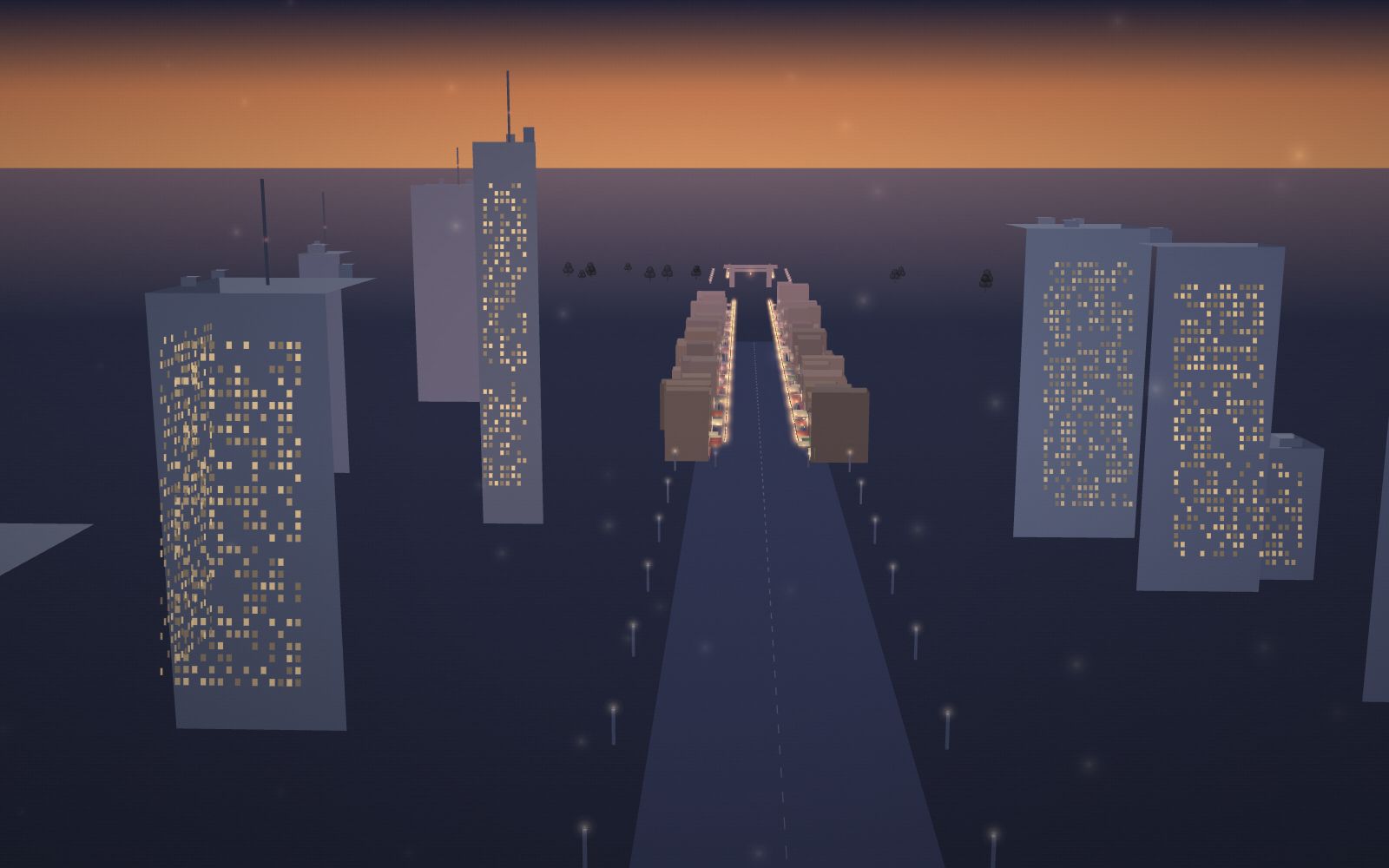
Dusk over the western towers. From up here the whole metropolis looks like something you could pick up in two hands.
Shinjuku, just after rain
Dusk over the western towers. From up here the whole metropolis looks like something you could pick up in two hands.
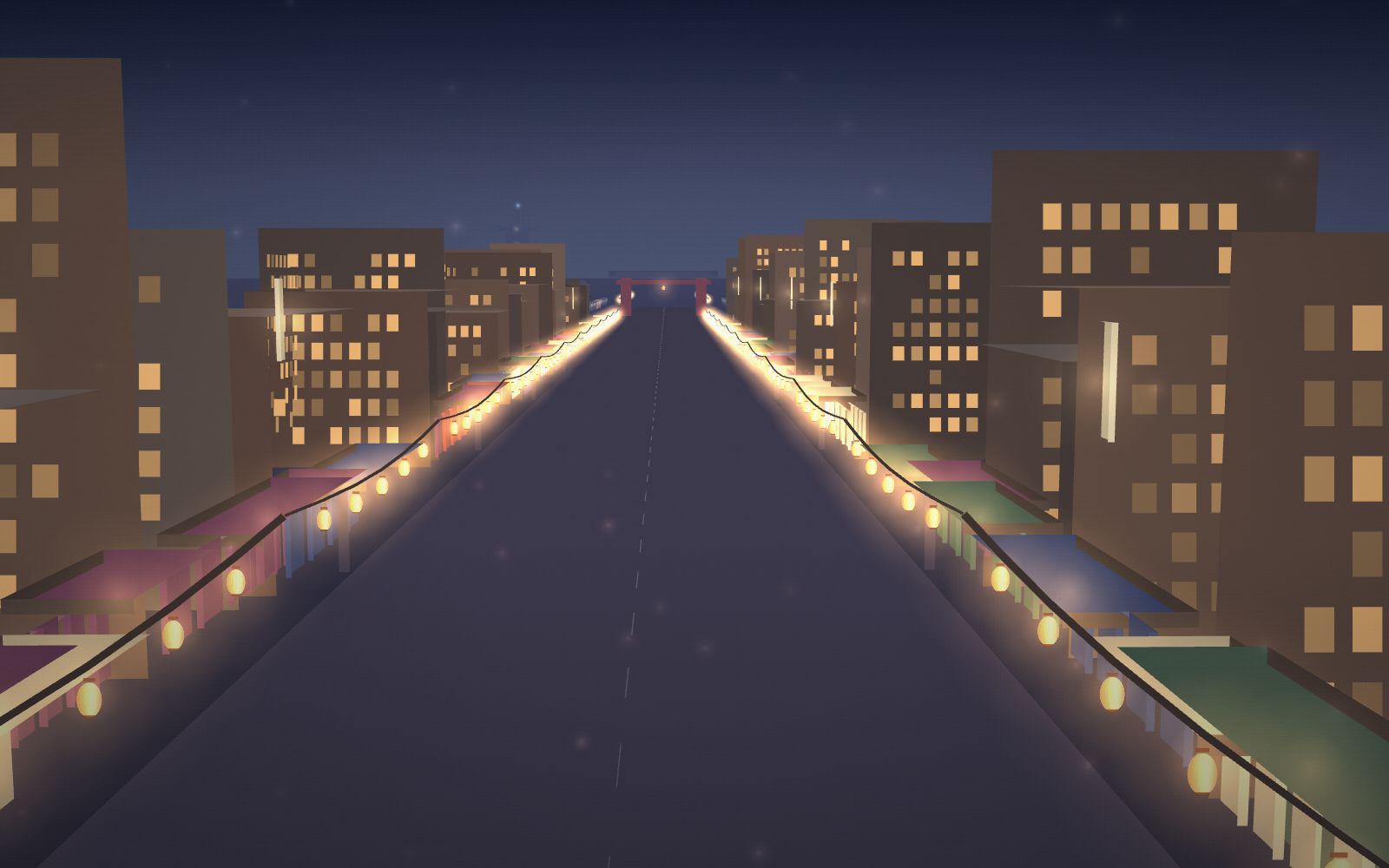
Nakamise street, Asakusa
Paper lanterns lean over a shopping street that has been selling the same souvenirs for three hundred years.
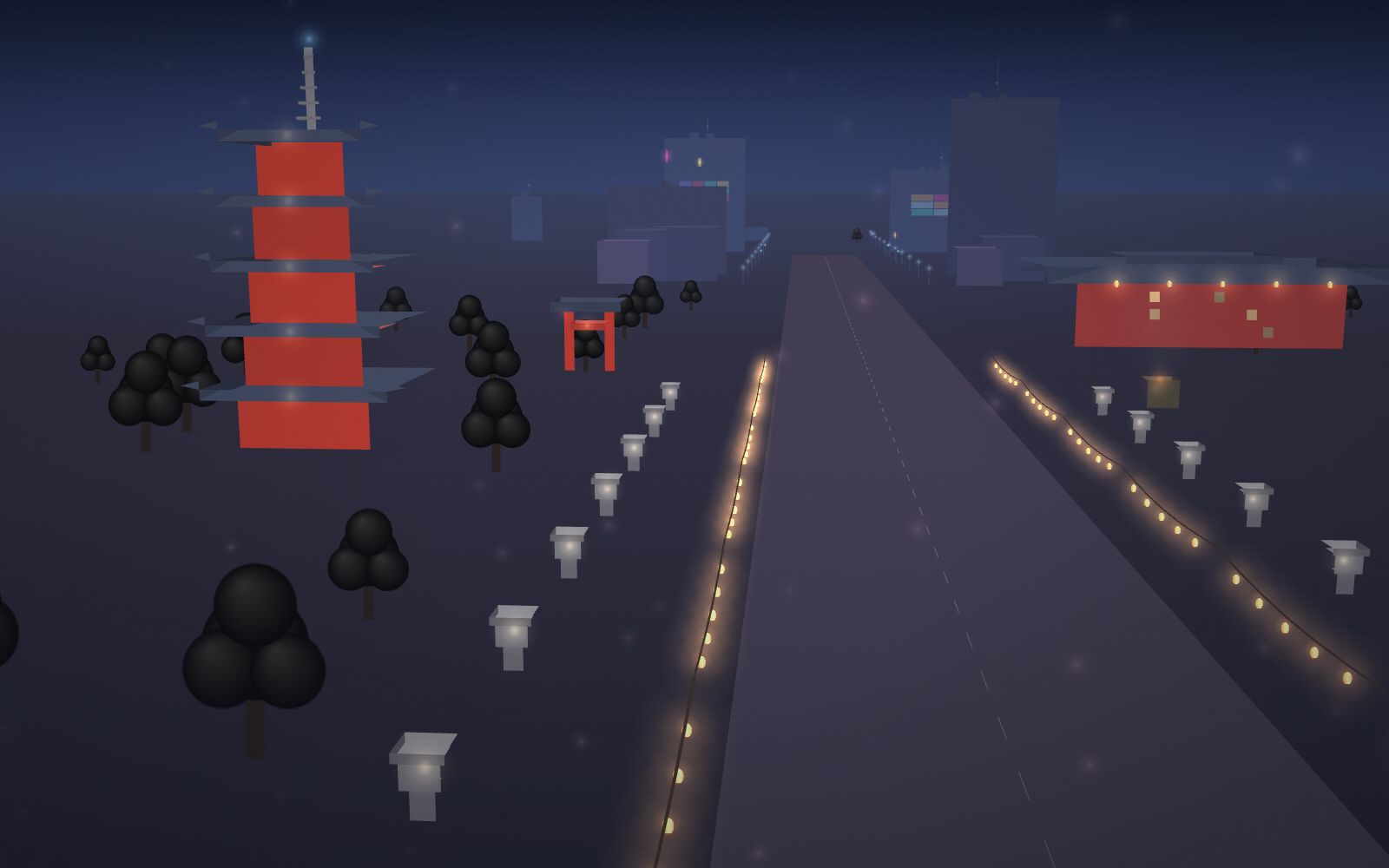
Sensō-ji, Asakusa
Through the gate: incense, stone, and a five-storey pagoda that has been rebuilt more than once and never moved.
Shibuya crossing
The screens change colour and everyone moves at once. It only looks like chaos from above.
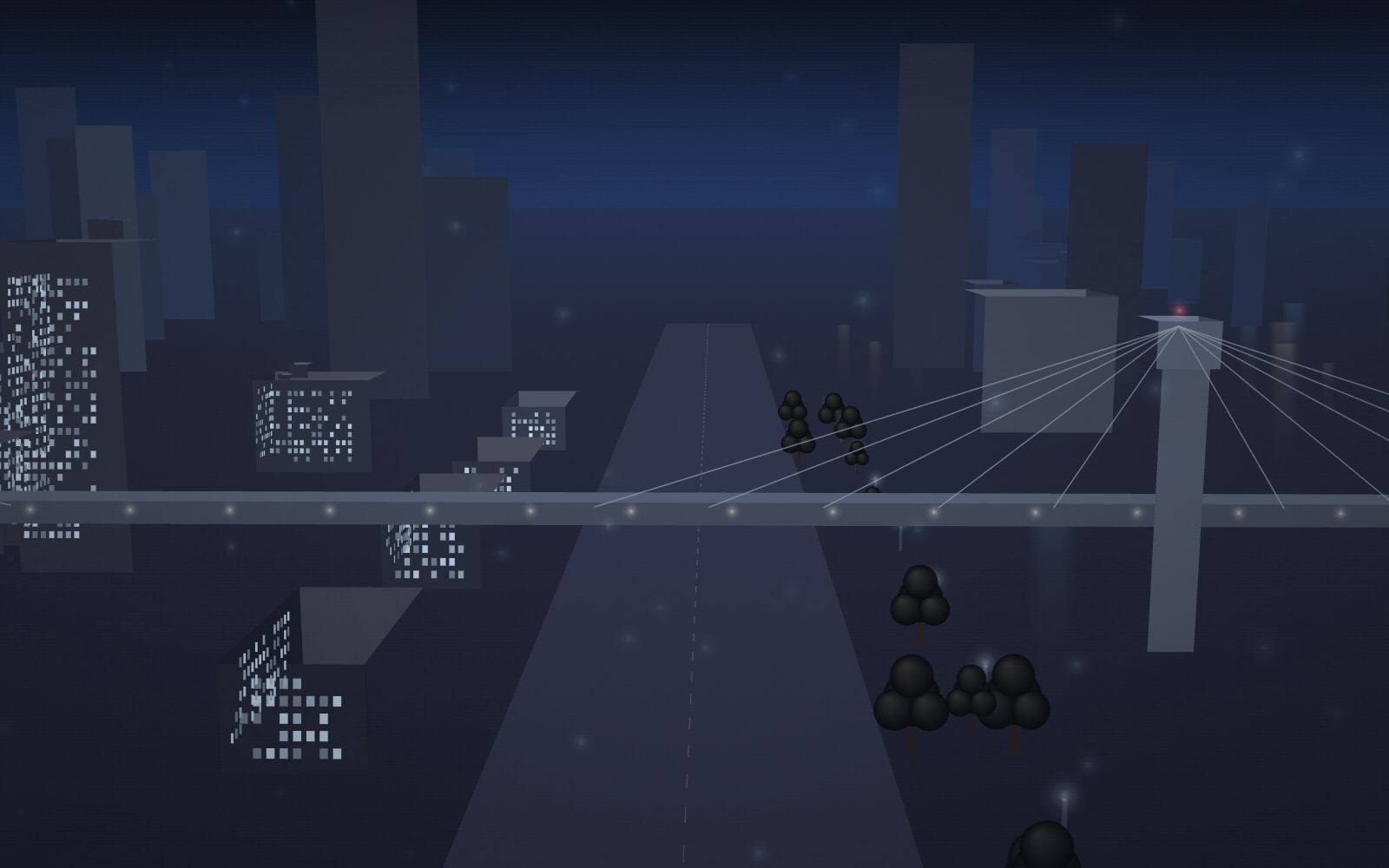
Odaiba waterfront
Across the bay the towers keep their lights on. Pick a district, walk it slowly, and be back before the trains stop.
Scroll to fly
Districts
The flight crosses the city in five minutes. These take longer — each one is a short walk from a station on the loop.

The world’s busiest pedestrian scramble. Cross it once, then watch it from the window above.
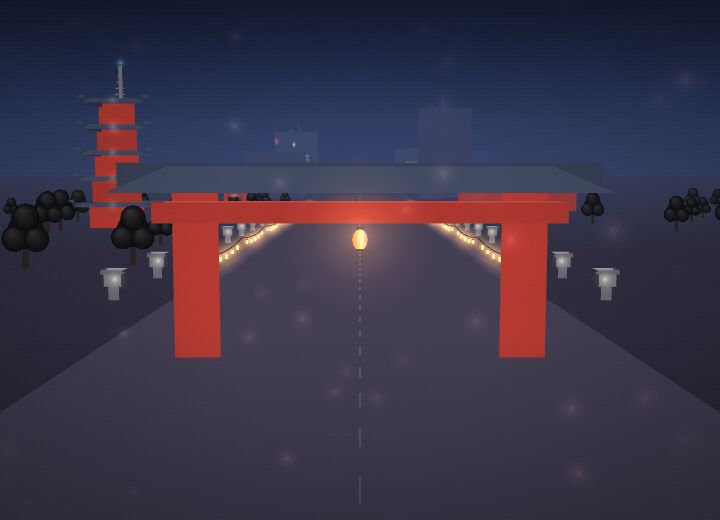
Tokyo’s oldest temple, reached through a shopping street strung with paper lanterns.
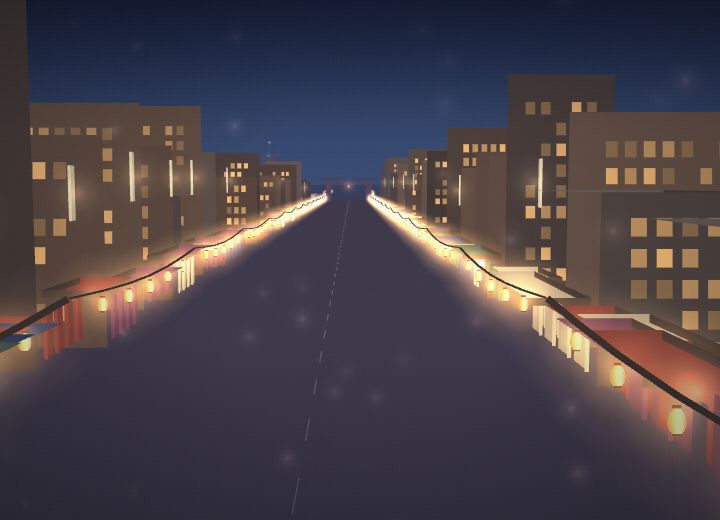
Two hundred metres of stalls under awnings, selling fans, sembei and the same lucky charms since 1688.
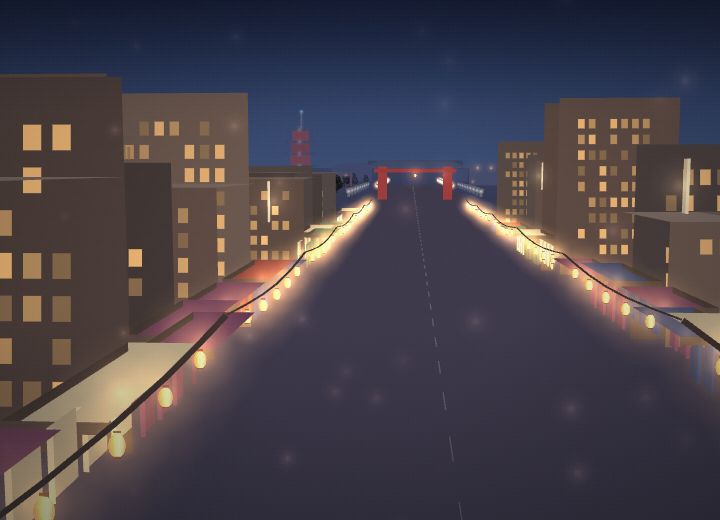
Narrow lanes of seafood stalls, knife shops and tamagoyaki on sticks, open well before dawn.
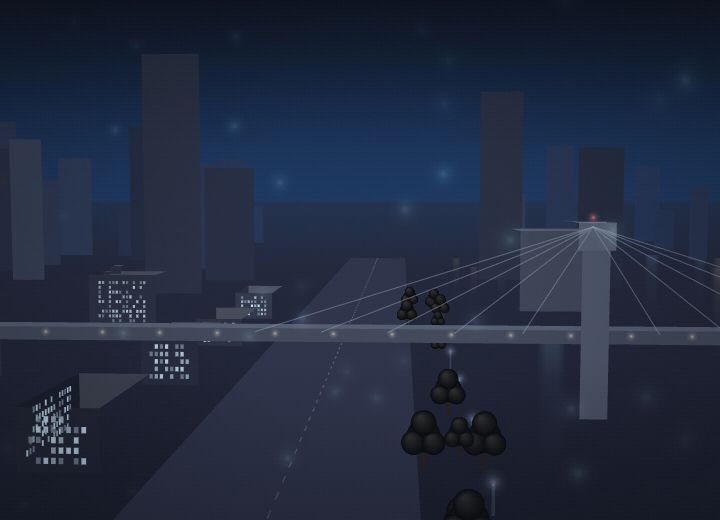
The suspension span over the bay, lit white in winter and warm gold the rest of the year.

A boardwalk, a small beach, and a skyline that turns its lights on across the water.
Food
Every one of these is a counter, a cart or a window. Order, eat it there, hand the sticks back.
Pork bone broth simmered overnight, thin noodles, a marinated soft egg on top.

Octopus batter balls turned with a pick until crisp, then painted with sauce and bonito flakes.
Charcoal-grilled skewers, salted or glazed, eaten standing at the counter.

A sweet bun under a thin cookie crust, warm from the case, usually eaten walking.