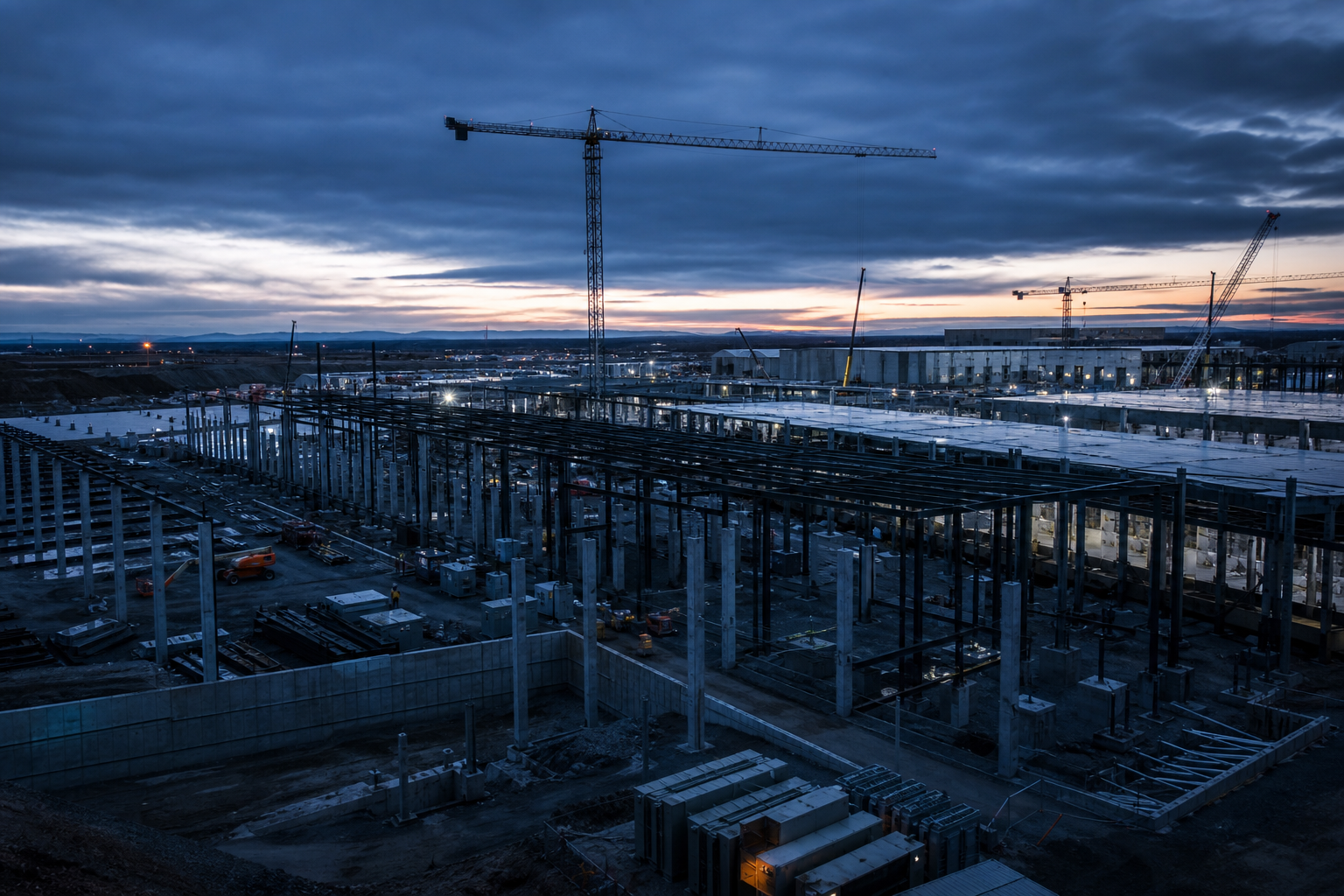
The numbers have become almost too large to process. Google, Microsoft, Amazon, and Meta -- the four largest cloud and AI platforms -- are collectively spending $725 billion on capital expenditures in 2026, according to the latest analyst estimates. That is a 77% increase from 2025, and a figure that exceeds the annual GDP of Switzerland, Saudi Arabia, or the Netherlands. The bulk of that spending is directed at AI infrastructure: data centres, custom silicon, power infrastructure, and the networking required to connect them.
The scale of the investment reflects a conviction, shared across all four companies, that the current moment in AI development is a once-in-a-generation infrastructure build-out -- comparable to the construction of the internet backbone in the 1990s, or the electrification of industry in the early twentieth century. Miss the build-out, the argument goes, and you miss the platform. And in platform economics, the winner takes most.
What $725 Billion Buys
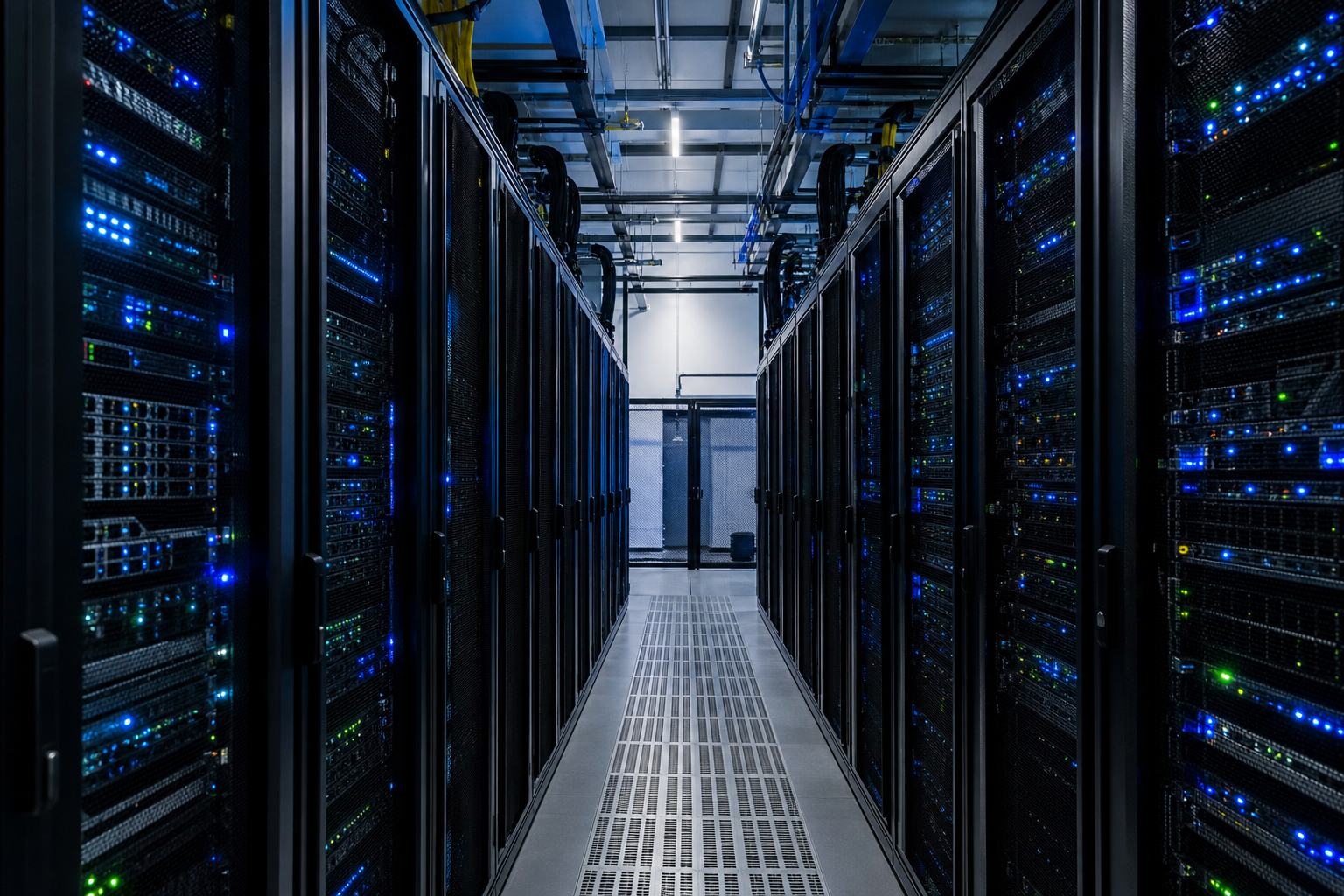
The breakdown of the spending reveals the priorities of each platform. Google is investing heavily in custom TPU silicon and the networking infrastructure required to train and serve frontier models at scale. Microsoft is building out Azure capacity to support its OpenAI partnership and the enterprise AI services that have become its fastest-growing revenue line. Amazon is expanding AWS data centre capacity globally, with particular focus on sovereign cloud regions in Europe and Asia. Meta is building the GPU clusters required to train its next generation of Llama models and the recommendation systems that power its advertising business.
The common thread is power. AI training and inference are extraordinarily energy-intensive, and the constraint on scaling AI is increasingly not compute or capital, but electricity. All four companies have announced major investments in power infrastructure, including long-term agreements with nuclear operators, utility-scale solar and wind projects, and in Microsoft's case, a partnership to restart the Three Mile Island nuclear plant. The energy transition and the AI build-out are becoming inseparable.
"In 2026 alone, companies like Amazon, Microsoft, Google, and Meta are projected to invest over $650 billion in AI. That is nearly 2x growth from last year -- and the spending is accelerating, not decelerating."
— Ferguson Wellman Capital Management, May 2026
The Return Question
The question that investors are increasingly asking is whether the returns justify the investment. The four companies have reported strong revenue growth in their AI-related businesses -- Microsoft's Azure AI revenue grew 157% year-over-year in Q1 2026, Google Cloud grew 28%, and AWS grew 17%. But the capital expenditure is growing faster than the revenue, and the gap between investment and return is widening.
BCA Research published a note last week warning that the AI trade is entering a 1999-style melt-up, with the S&P 500 potentially reaching 9,200 before a correction. The analogy to the late 1990s internet bubble is imperfect -- the AI companies are generating real revenue, unlike many dot-com era firms -- but the pace of capital deployment and the concentration of market value in a small number of companies has historical precedent.
Who Actually Benefits
The $725 billion being spent by the hyperscalers flows through to a relatively small number of beneficiaries. NVIDIA remains the primary supplier of GPU compute, with an estimated 70-80% share of the AI training market. Custom silicon from Google (TPUs), Amazon (Trainium), and Microsoft (Maia) is growing, but NVIDIA's lead in software ecosystem and manufacturing capacity is difficult to close quickly. TSMC, which manufactures chips for all of these companies, is running at near-full capacity and has announced a $100 billion US investment to expand domestic production.
Beyond chips, the beneficiaries include data centre construction firms, power equipment manufacturers, cooling technology companies, and the utilities that supply electricity to the new facilities. The AI build-out is creating a broad industrial supply chain that extends well beyond the technology sector -- a dynamic that has implications for employment, energy policy, and infrastructure investment across the economy.
The trillion-dollar question -- whether the AI infrastructure being built in 2026 will generate returns commensurate with the investment -- will not be answered for years. What is clear is that the four largest technology companies have made a collective bet of historic proportions that it will. The rest of the economy is now organised around that bet, whether it wants to be or not.